

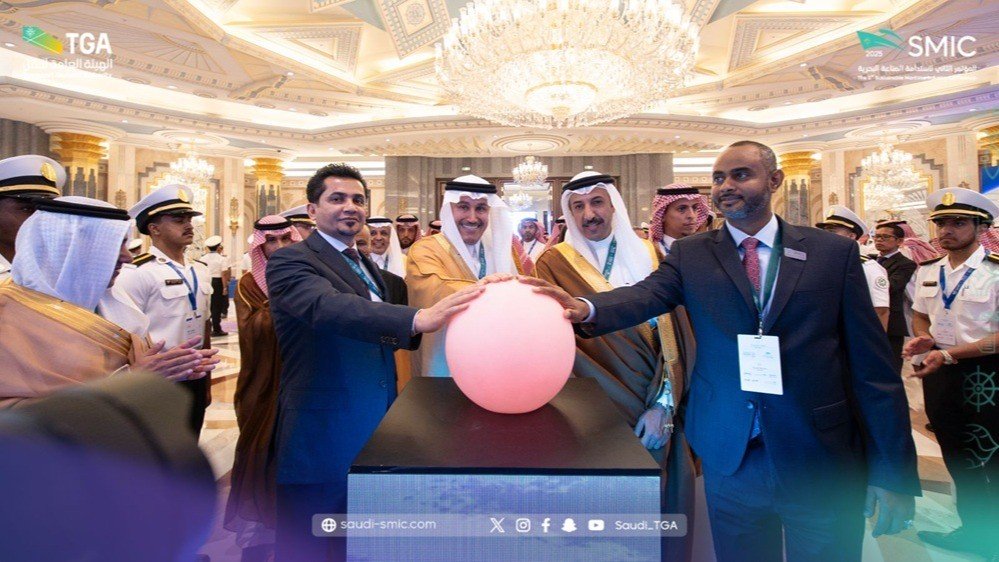
This September, Jeddah became the epicenter of global maritime dialogue as the Second International Conference on Maritime Sustainability (SMIC 2025) convened leaders, policymakers, and industry experts from across the world.
Over several days, the event showcased how Saudi Arabia is not only strengthening its maritime sector but also re-defining its role as a global logistics hub under Vision 2030.
Ten Agreements, One Unified Vision
A cornerstone of the conference was the signing of ten strategic agreements between Saudi institutions and international partners. These ranged from partnerships with the Ministry of Health to improve seafarer welfare, to collaborations with KAUST driving R&D for decarbonization.
Agreements also tackled critical issues such as waste management, safe transport of hazardous goods, and training the next generation of maritime professionals through partnerships with leading universities and academies. Each deal reflects a long-term commitment to sustainability, safety, and innovation.
Regional & Global Leadership
For the first time, Saudi Arabia hosted the Arab Maritime Authorities Meeting, in collaboration with the International Maritime Organization (IMO). This landmark gathering underscored the Kingdom’s leadership in fostering regional regulatory alignment, technical cooperation, and capacity-building across the Arab maritime world.
Global leaders, including representatives from IMO and IALA, commended Saudi Arabia’s ability to transform sustainability goals into concrete initiatives.
Driving Sustainability & Innovation
Panel discussions and workshops went beyond policy — they addressed the practical roadmap to decarbonize shipping, digitize operations, and modernize ports. Topics included:
- Green Logistics & Smart Ports – digitalized, automated, and energy-efficient port ecosystems.
- Decarbonization Strategies – hybrid projects cutting fuel use by 25% and commitments to reach net-zero emissions by 2050.
- Marine Biodiversity – initiatives like reducing underwater noise and planting 100 million mangroves under the Saudi Green Initiative.
- Human Capital Development – building local skills and certifications to ensure a just, technology-driven transition for the workforce.
Alignment with Vision 2030
Saudi Arabia’s Vision 2030 sets clear targets for the Kingdom to become a leading global logistics hub, connecting three continents. SMIC 2025 demonstrated that sustainability is not a parallel agenda — it is integrated at the very heart of this transformation.
By combining economic growth with environmental stewardship, Saudi Arabia is showing that logistics modernization and ecological responsibility are not mutually exclusive, but mutually reinforcing.
Why It Matters: Saudi Arabia’s Strategic Positioning
The outcomes of SMIC 2025 extend far beyond maritime sustainability — they reinforce Saudi Arabia’s competitive edge in logistics and technology:
- Global Logistics Hub Status: By embedding sustainability into its ports and shipping networks, Saudi Arabia strengthens its claim to be the premier logistics hub linking Asia, Africa, and Europe. This positions Jeddah and other Saudi ports as the first choice for global trade routes seeking efficiency and compliance with environmental standards.
- Technology Leadership: The emphasis on smart ports, digitalization, cybersecurity, and automation elevates Saudi Arabia as a regional leader in logistics tech. This transition from traditional infrastructure to technology-driven solutions enhances visibility, efficiency, and resilience across supply chains.
- Investment Magnet: By aligning logistics with green financing and ESG principles, Saudi Arabia attracts international investors and global shipping lines that prioritize sustainability and innovation. This helps unlock capital for mega-projects and accelerates Vision 2030’s diversification goals.
- Regional Standard Setter: Hosting the first Arab Maritime Authorities meeting positions Saudi Arabia as the rule-maker, not just a rule-taker in regional maritime regulation and digital transformation. This leadership role ensures that Riyadh and Jeddah become hubs for both policymaking and operational innovation.
- Future-Ready Workforce: The focus on training, R&D, and talent development ensures that the Kingdom builds not just ports and platforms — but the human capital needed to sustain long-term growth in logistics and technology.
The sea has always connected nations — but today, it also connects the future of our climate, economy, and supply chains.
With SMIC 2025, Saudi Arabia has signaled that the path forward is green, digital, and collaborative. This is more than a maritime milestone — it is a strategic move in logistics and technology positioning that cements the Kingdom’s role as a global hub for sustainable trade.
