

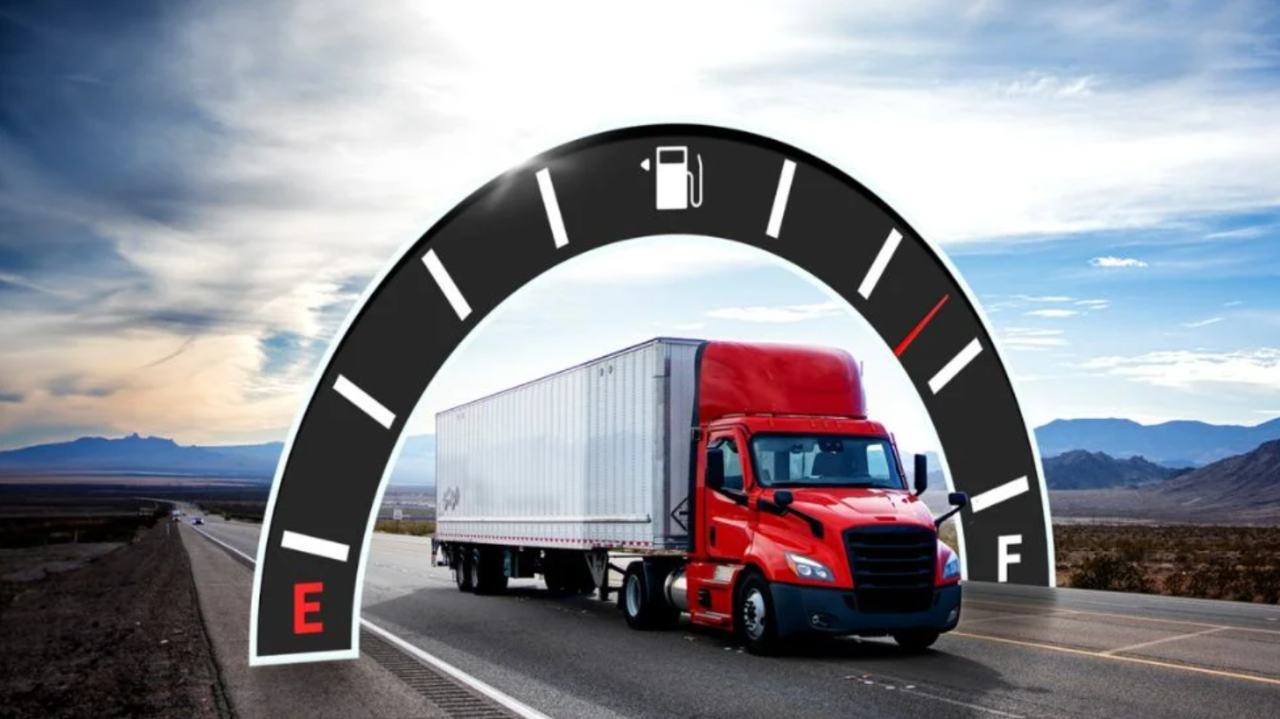
Saudi Arabia entered 2026 with a new diesel reference point: 1.79 sar/litre, effective 1 January 2026, as published on Saudi Aramco’s retail fuels update.
On its own, a +7.8% move (from1.66 sar to 1.79 sar) may look manageable. But in context, it confirms something bigger: diesel is no longer a stable “background cost”—it is now a strategic variable that influences network design, pricing models, and service decisions.
The structural shift: from subsidized stability to a market-linked path
Saudi Aramco’s annual diesel price review mechanism (introduced in 2022) has produced a step-change trajectory. Notably, industry commentary highlights that the 2026 revision reinforces a multi-year transition away from heavily subsidized fuel and toward a more market-linked framework.
What this changes operationally: diesel becomes a “design input,” not an invoice line
When diesel volatility rises, logistics strategies typically evolve in three layers:
1) Contracting & pricing: risk-sharing becomes non-negotiable
Many logistics players already operationalize this via fuel surcharge/index mechanisms rather than absorbing fuel risk in a fixed rate. For example:
- Aramex states its domestic fuel surcharge is based on diesel prices in Saudi (as reported by the Ministry of Energy and Saudi Aramco) and publishes a diesel-index tabletied to surcharge % bands.
- NAQEL Express applies fuel surcharges and explicitly notes they are subject to adjustment based on future corrections in domestic diesel/petrol price.
What shippers should do now (practically):
- Move from “all-in fixed” to base rate + transparent fuel index (monthly or quarterly).
- Define trigger bands (e.g., adjust every 0.05 – 0.10 sar/litre change) and cap/ceiling rules for stability.
- Separate linehaul and last-mile fuel logic—because their cost drivers differ (distance vs. stops/idle time).
2) Network design: the “best warehouse location” may change
A higher diesel baseline rewards:
- Fewer empty kilometers (backhaul planning, route pairing, continuous moves)
- Higher drop density (multi-drop route engineering, zone-based delivery waves)
- Smarter hub-and-spoke / cross-dock decisions (when to consolidate vs. direct ship)
This is exactly why industry analysis framed the moment as a “reset” for freight strategies: fuel can no longer be treated as a buffer—execution precision and network efficiency become the advantage.
3) Fleet & execution: utilization beats expansion
In a rising fuel environment, the fastest savings often come from “micro” levers:
- Speed governance and idle control
- Preventive maintenance (tires, filters, injector health)
- Driver behavior coaching
- Route optimization + dynamic dispatch
- Fuel monitoring and anomaly detection
These aren’t glamorous—but at scale, they are often the difference between margin erosion and margin protection.
The ripple effect is already visible in Saudi listed-company disclosures
What makes this diesel change especially relevant is how quickly it shows up in real corporate cost guidance—which then flows into procurement, supplier negotiations, and ultimately freight tenders.
Examples from Saudi disclosures and coverage:
- Almarai cited an estimated ~70m sardirect incremental cost for 2026 (plus indirect supply chain impacts).
- Northern Region Cement pointed to an expected ~11% rise in production costs.
- Other companies (cement, agriculture, manufacturing) reported cost impacts tied to diesel adjustments.
This matters for logistics because it accelerates two behaviors:
- More rate pressure (procurement teams ask carriers to “hold the rate”)
- More surcharge acceptance (finance teams see fuel as an indexed variable, not a negotiation failure)
Why this supports Saudi’s broader logistics transformation (not against it)
Saudi’s National Transport & Logistics Strategy explicitly emphasizes integration, performance, and fiscal sustainability / optimizing transport assets’ total cost of ownership—and fuel is central to TCO. Ministry of Transport Saudi Arabia
At the same time, the Kingdom is expanding rail and multimodal ambitions:
- Saudi Arabia’s rail network is already over 6,000 km, with plans for further expansion, as cited by the Minister of Transport and SAR Chairman.
- Major “Land Bridge” corridor narratives focus on east-west connectivity across ~1,500 km and broader network expansion goals.
As diesel becomes structurally higher, intermodal economics improve (especially for long-haul, high-volume corridors). Even before full megaproject completion, this pushes the market toward:
- Better linehaul planning
- More consolidation discipline
- Higher demand for visibility + analytics to defend every riyal of cost
A simple checklist for shippers & 3PLs in 2026
If you’re updating strategy this quarter, here’s a clean starting point:
- Measure exposure: fuel as % of cost per lane (by region, by vehicle type).
- Reprice correctly: add a fuel index clause with clear triggers + governance.
- Redesign routes: reduce empty miles, increase drop density, improve load factor.
- Rebalance inventory: review central vs. regional stocking where long-haul dominates.
- Digitize execution: telematics + dispatch optimization + fuel anomaly alerts.
- Scenario-plan 2026–2027: what if diesel moves another 5–15%? What breaks first?
- Push collaboration: shared user networks, co-loading, return-load marketplaces.
Where Rafid fits (our view)
At Rafid, we see this moment creating a clear winner profile in Saudi logistics: asset-light, data-driven orchestration.
When diesel rises, the advantage shifts to the operator who can:
- Model true lane economics,
- Build transparent pricing with clients,
- Orchestrate the right carrier mix,
- Optimize routing and utilization continuously,
- Provide weekly cost-to-serve analytics that procurement and finance can trust.
